Where Corpilus fits
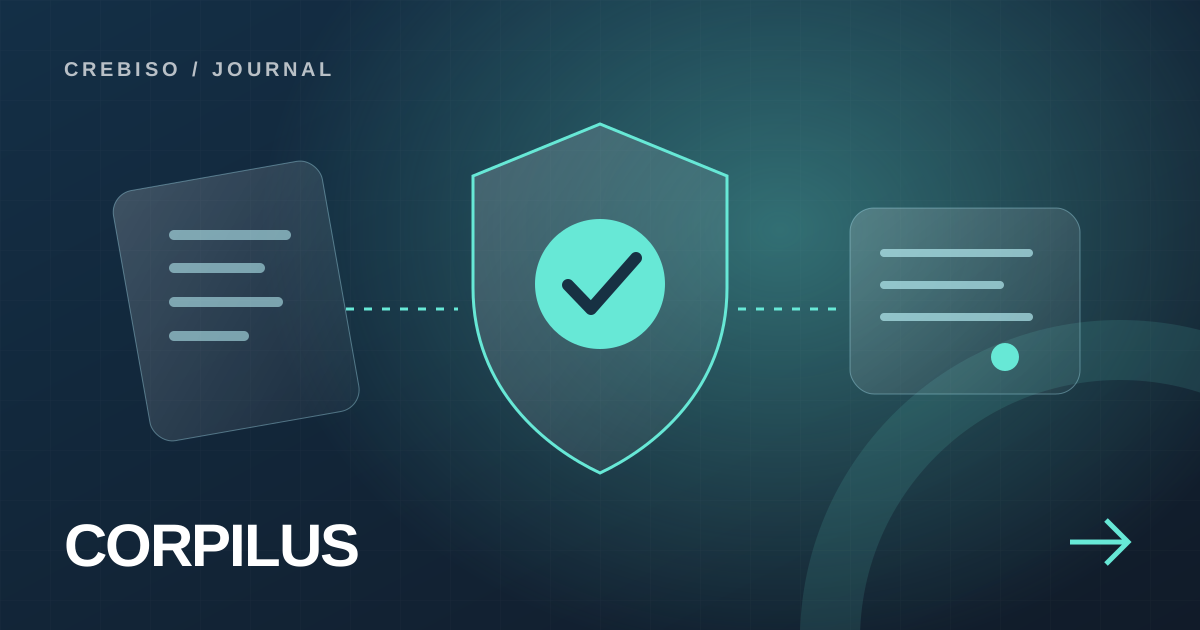
Corpilus brings together three areas: Privacy protects sensitive information used with AI, Shield focuses on application protection, and Studio answers questions from company documents. Start with the problem your team needs to solve, then choose the relevant capabilities.
Start with one question people ask every day
Choose a question that repeatedly sends colleagues searching for the same material. It might concern a service procedure, an offer or an internal policy. Record who asks it, where they currently look and who can judge whether the answer is correct.
Your first goal need not be an automatic reply to a customer. A useful pilot can help a colleague prepare a draft for review before sending. That makes it easier to separate retrieval quality from responsibility for the final message.
Give documents an owner and a current version
Retrieval-augmented generation, or RAG, uses retrieved material to help generate an answer. Studio applies this approach to company documents and provides source references. A reference alone, however, does not establish that the conclusion is correct.
- Decide which document version is current and who maintains it.
- Separate public material from documents with restricted access.
- Prepare questions the sources can answer, as well as questions they cannot.
- Check whether the cited passage actually supports the answer.
Combine data protection with team practices
Privacy can replace recognised sensitive values with placeholders. A reversible replacement is pseudonymisation, rather than a guarantee of complete anonymity. Protection also depends on configuration and the communication channel in use.
Training therefore needs to cover more than a button. People should know which material they may use, what to review before sending and whom to ask when uncertain. Use fictional data in exercises so that the training itself does not become an unintended disclosure of client information.
Evaluate the first pilot
Suggested exercise: choose ten recurring questions. Assign an expected source, a reviewer and a response to an incorrect answer for each. This is a proposed exercise, not a reported customer outcome.
Track preparation and review time, corrections and cases where the tool correctly reports insufficient evidence. Use those findings to decide whether to expand. If the team does not understand the output, the next step may be practical AI training rather than more licences.